

your performance process exists, but feels more administrative than helpful
feedback mainly happens around formal review periods
managers have a process to follow, but don’t always feel equipped for the conversations behind it
goals are being set, but their connection to everyday work and development is unclear
feedback often comes too late, once frustration or performance issues have already built up
you want to introduce or rethink OKRs, check-ins, 360° feedback or development conversations
the organization has grown and the system that once worked no longer fits
you want more consistency across managers without turning every conversation into a script
Performance Management Design & Consulting
Reviewing or redesigning the overall performance process, rhythm, roles and responsibilities.
Objectives & OKRs
Support in shaping or refining the way goals are set, discussed and followed over time.
Performance & Development Conversations
Designing useful check-ins, performance reviews, development conversations and 1:1s.
Continuous Feedback
Creating practices that make feedback part of everyday work rather than something reserved for formal review moments.
360° Feedback
Designing or refining multi-source feedback and connecting it meaningfully to development.
Manager Training & Practice
Helping managers build confidence around feedback, performance conversations, goal setting and difficult discussions.
Mentoring & Coaching
Individual or group support for managers and People & Culture professionals who are carrying the process forward.
Facilitation
Alignment sessions with HR, leadership teams or other key groups involved in the process.
Tools & Materials
Conversation guides, frameworks, templates, questions and practical resources that make the process easier to use.
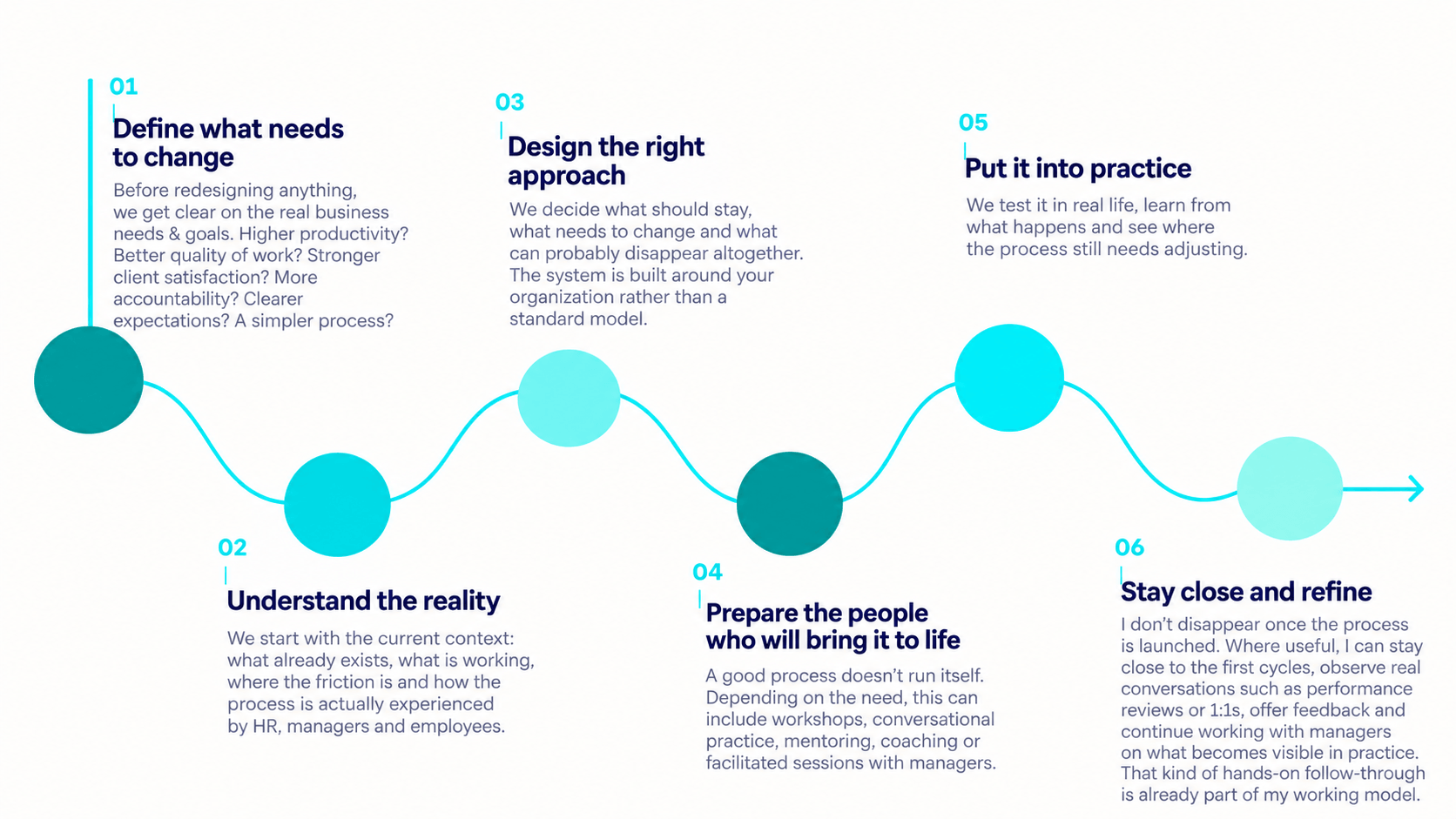
Implementation & Follow-up
Support during the first cycles, observation, feedback and adjustments based on what actually happens.
What stays with you after we work together.
What people say working with me on this subject
I had the opportunity to work closely with Florentina for many years at Zitec and to see first-hand how she shaped and evolved our approach to performance management. What stands out is her ability to move performance management beyond traditional evaluation and turn it into a continuous system focused on growth, accountability and meaningful conversations. The approach she helped build combines ongoing feedback, 360-degree perspectives, development conversations and clear goal setting, while remaining practical and adaptable to the organization. Over time, it became deeply embedded in the way we work, supporting both individual development and stronger alignment between people, teams and business objectives. I would confidently recommend her to companies looking to rethink or mature their performance management practices in a way that is both people-centered and business-relevant.